Spider Web Engineering Challenge
Bring biomimicry and structural design into your lesson plans with this spider inspired STEM challenge for kids!
Halloween is the perfect time to blend spooky fun with serious learning. In this STEM activity, students become structural engineers, mimicking the design of real spider webs to create their own using simple materials. Blend crafting and fine motor skills with an exploration of biomimicry, tensile strength, and engineering design to challenge students’ creativity and problem-solving skills. Whether you teach in a classroom, homeschool, or run after-school programming, this activity is ideal for ages 7–12 and can be used for Halloween, but also Biology class, Earth Day or Summer Camp.
Spider Web Engineering Challenge – STEM Activity Using Biomimicry
Table of Contents

Disclaimer: This article may contain commission, paid partnerships, or affiliate links. We independently review everything we recommend. When you buy through our links, we may earn a commission from qualifying purchases.
Teacher Summary: This STEM lesson challenges students to build a spider web using yarn and simple materials. While learning about biomimicry and structural engineering, they’ll test their designs with small weights. Perfect for classrooms, homeschool, or after-school programs.
We may think of Halloween as just a time for pumpkins and ghosts and monsters – but let’s not forget the spiders. Those spiders are a whole lot more than creepy though, they’re genius architects and their webs are truly works of art!
So let’s forget the ghost stories and take on a really cool engineering challenge where we will engineer our own spider web. This project will use the engineering design principle of structural engineering, it will explore the concept of biomimicry and will require creative problem solving from your students to get the job done – but I know they will be up to the challenge!
The Science of Spider Webs
If you’ve ever really looked at a spider web you know that they are so much more than sticky, spooky nuisances, they are actually natural works of art. We know that spiders use their webs to catch their food, but did you also know that they use their webs for shelter, for rest, to hold their eggs and keep them safe. Spider’s webs serve them in all facets of their lives.

We often think of spider webs as Halloween props, but they are actually masterpieces of natural engineering. Spider silk is one of the strongest materials in nature. Stronger than steel by weight and highly elastic. Spiders spin their webs by creating silk which is made up of a string of liquid protein that becomes tough and solid as it passes through spinnerets on the spider’s belly. This spider silk is incredibly strong but also very stretchy. A spider spins beautiful webs that are highly efficient at absorbing energy, capturing prey, protecting their eggs, and withstanding environmental forces.
What is Biomimicry?
What is biomimicry? It is when we, as humans, look at the way nature solves problems or creates solutions and then we mimic that knowledge to tackle problems we’re facing. In our case we are going to look at spider webs and try to mimic their design to see if we can create a web that will hold weight or absorb energy.
The Engineering Challenge: Build a Strong Spider Web
Now it’s your turn to apply the principles of spider web design to make your own. The STEAM challenge is to use the provided materials to spin your own web that is strong enough to hold a toy or other weight. Making the challenge a little open ended will let the creativity flow. All students will have access to the same materials, but you could end up with a classroom full of different creations!
Materials
- A frame for the web (options: cereal box cutout, cardboard, craft sticks, embroidery hoop)
- String or yarn (this will mimic spider silk)
- Tape, glue, or thumbtacks for securing the webbing
- Scissors
- A small toy or object to test the web’s strength (plastic spider, small action figure, etc.)
- Optional: Craft materials for decoration (pipe cleaners, glitter, paper spiders, googly eyes)
Step-by-Step Project Instructions
Talk it out
Talk to the kids about how webs are made, look at pictures or videos of spider webs to get them thinking about their own designs.
Draw it out
If you feel like your kids are more visual, you can have them draw out their plans on a piece of paper. Think about design, structure and connections.
Build
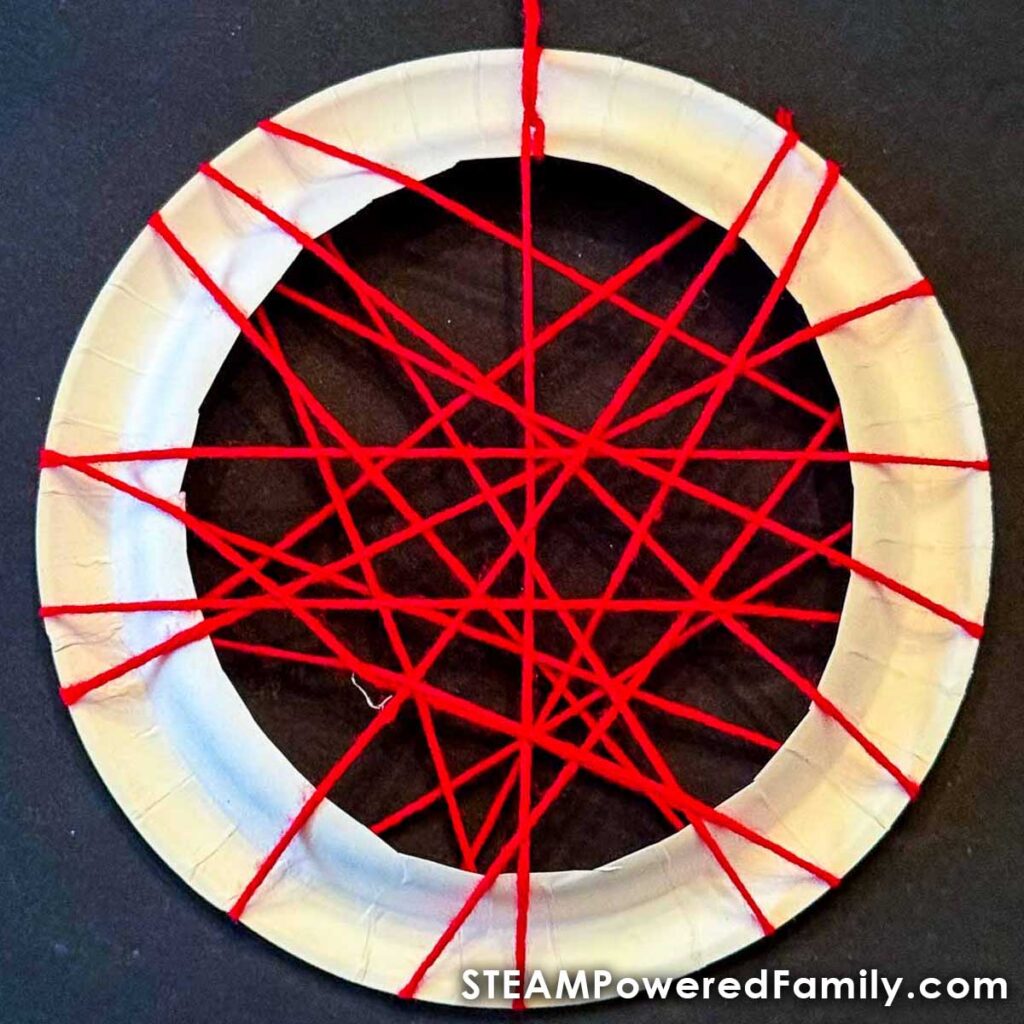
Let the students choose their materials and let them start building. Start with their base or frame and then spin their webs around it. Because we are asking the kids to weave a web without connectors, you will need to remind them that they can’t just wrap it like a cocoon, it needs to resemble a spider’s web in the end.
Here are some of our designs:


Test
Carefully place your toy or weight on the web. Does it hold? Try adding another spider or a small weight. How much weight can your web support? Will it hold if we drop the toy rather than place it on the web? This is a great moment to talk about strength and structural integrity.

Extension Ideas and Cross-Curricular Connections
This Halloween STEM activity can easily become a full-day lesson or interdisciplinary project for your classroom with a few little tweaks. Here are some ideas to inspire your lesson planning and build in those powerful learning connections.
Language Arts: Write a story or poem from the perspective of a spider building its web. Or read a book about spiders and their webs. A classic is Charlotte’s Web another great one is The Very Busy Spider.
Art: Add handmade spiders, paper raindrops, or decorative elements to turn the webs into a spooky classroom display. Also, make sure to vary the supplies you give your kids, so they have a large variety of textures, colors and materials to create with.
Science Research: Have students explore other examples of biomimicry in nature and share how they might solve human problems. Or study the incredible world of spiders with a book like National Geographics’ Spiders or this video from the Toronto Zoo on spiders.
Math: Measure web lengths, angles, or number of intersections. Compare data between student designs.
Social Studies: Explore the cultural symbolism of spiders and webs in folklore and mythology.
Extension: For another STEM challenge that brings a new layer of complexity and science, try this Spinning Spider Magnetic STEM Challenge.

Why Teachers and Parents Love This Activity
There is so much to love with this activity for the classroom!
- It’s low-prep and high-engagement. All materials are easy to source, budget friendly, and the setup is minimal.
- The project is curriculum-aligned, covering NGSS-aligned concepts like biomimicry, engineering design, and structure/function.
- Spider Web Engineering is perfect for Halloween or Earth Day! It combines festive fun with meaningful learning, while also creating fantastic decorations for your classroom. Ensure you provide a wide variety of materials so your students can really get creative.
- Differentiation is built-in allowing you to easily scaffold this activity, such as challenging older students with weight limits or bonus design tasks.
Spider Web Engineering Challenge FAQ
This activity is ideal for students ages 7–12 but can be adapted for both younger and older learners.
About 45–60 minutes, depending on the complexity of the build and time allowed for exploration.
Biomimicry, structural engineering, problem-solving, creative thinking, tensile strength, and observational skills.
Absolutely! Spider web construction ties in beautifully with lessons about animals, survival adaptations, or even architecture. Perfect for Summer Camp, Biology Class, Earth Day and Earth Sciences lessons.
Use rubrics based on design planning, execution, structural strength, creativity, and reflection. Include student self-assessments or peer reviews.
Spider Web Construction is a great project anytime of the year including Halloween, Earth Day, Biology class, and Summer Camp. There are so many great ways that you can turn this simple STEM lesson into a full on themed day in your classroom! I hope you really get caught up in this one!!