
Mini Golf Sports STEM Project
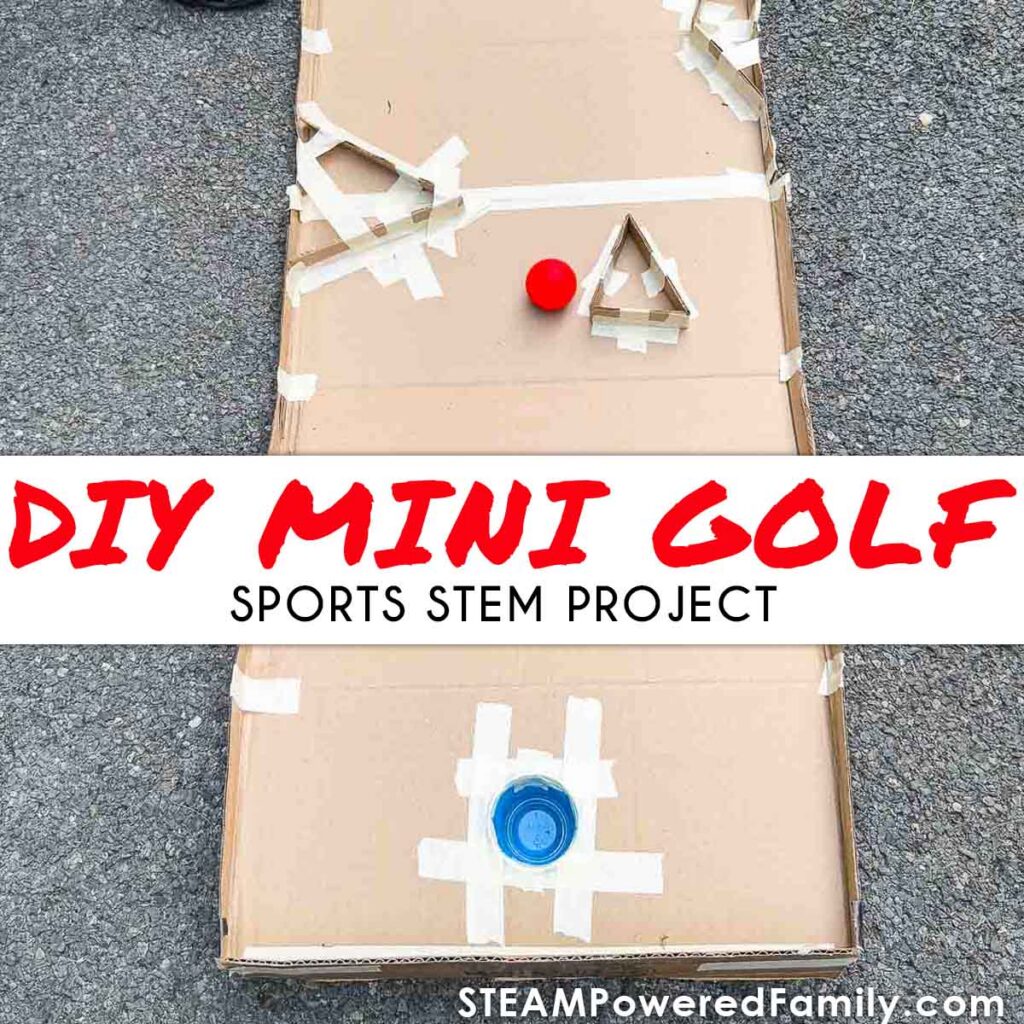
Kids don’t often associate sports with STEM learning – but so much of sports is tied into math and physics and so many kids are into sports that it is a great tie in to make an impact in your lessons. A perfect example of sports and stem is mini golf for kids. Golf is all about angles and distance and force and motion and gravity. This engineering design project will have the kids so engaged because it is turning something they are learning into something fun. In this mini golf classroom activity you are going to challenge students to design a mini golf hole and putter using cardboard and other recycled materials.
Sports STEM Mini Golf – Design a Putter & Hole
Table of Contents
Disclaimer: This article may contain commission, paid partnerships, or affiliate links. We independently review everything we recommend. When you buy through our links, we may earn a commission from qualifying purchases.
Why Mini Golf?
There are several reasons I love mini golf as a STEAM lesson. Golf – or in our case Mini Golf ties a lot of science and math concepts into one sport. Having each child or team of children construct a hole makes the project very hands-on and personal and in the end you end up with a DIY mini golf course where all of the kids can try each other’s design out so you have a chance to reinforce all of the concepts immediately after you teach them! Materials like cardboard and other recycled items are easy to come by so the project is low cost and low prep. Finally this project can be scaled easier and more difficult depending on the age range of the students you’re working with!
STEAM Concepts and Curriculum Links
What STEAM Concepts can I tie into a classroom mini golf course?
Physics
Let’s look at some of the physics involved in mini golf. A lot of mini golf holes involve hitting the ball up a ramp. A ramp is a type of inclined plane, which is a simple machine. In physics, simple machines are mechanical devices that can change the direction and capacity of a force. Inclined planes help people move objects both higher and lower without needing to use as much force as, say lifting the same object.
Also at work on a ramp is gravity. You may be trying to hit the ball up a ramp toward a hole, but at the same time, gravity is pulling that ball back down. You need to use enough force to get the ball over the apex of the ramp without hitting it so soft it rolls back down or hits it so hard that it ricochets off of an object at the top and comes back down.
Physics also looks at angles and curves of walls and how these can change the direction a ball is travelling. If you can determine how a ball might change direction when it hits a certain angle you can aim for that exact spot to turn the ball toward the hole. For example, if a ball hits an object like a wall straight on it will come straight back, but if it hits a wall that is positioned at an angle it will bounce off at another angle. Understanding this helps you figure out how you want to hit a ball.
Math
Another way that we apply STEM in sport is to look at how math can be used to find your way through this challenge.
For each hole measure the length from the tee to the hole. Measure how high or low the ramp is so you can try to figure out how hard you have to hit the ball to get it to the hole. Measure the angle that the ramp slopes. This will help you decide how hard or soft you need to hit the ball. A steeper or higher angle will need more force than a lower angle will.
What Do I Need?
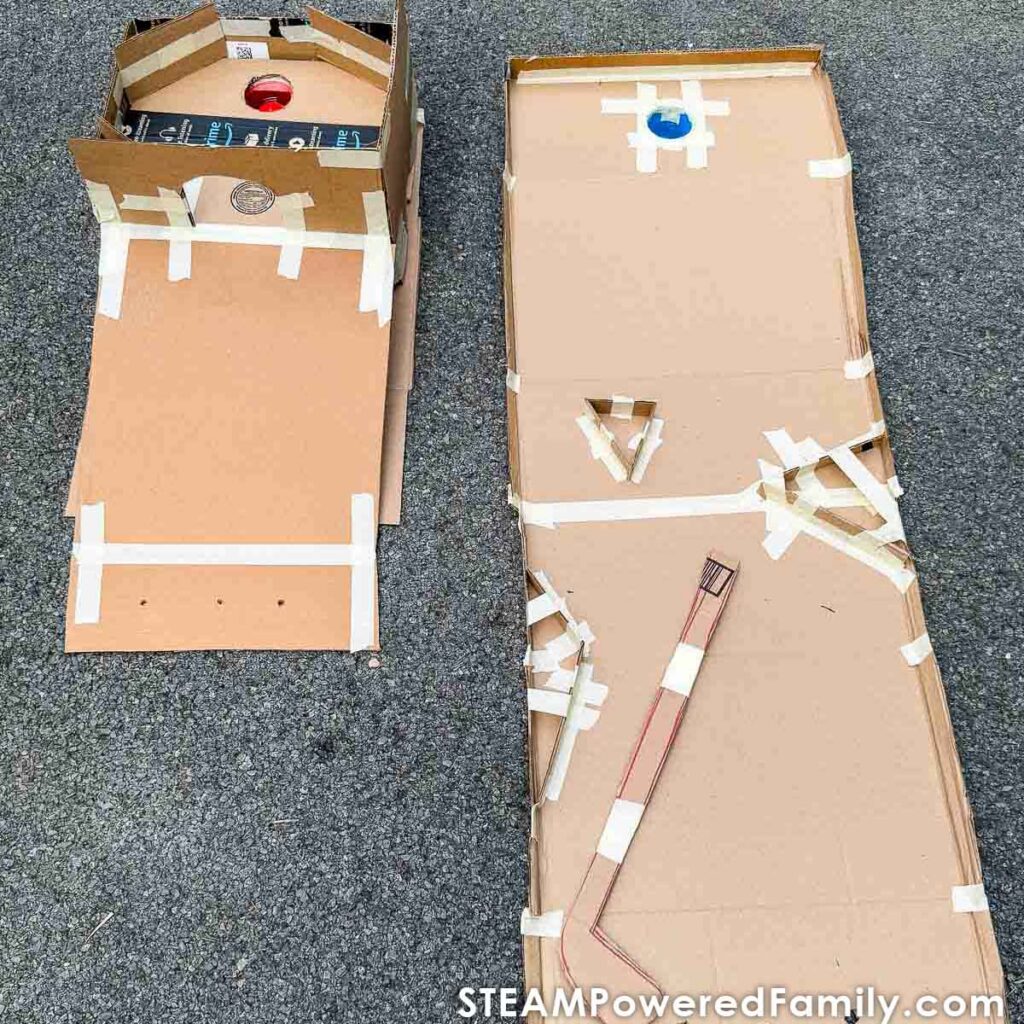
The beauty of this project is you can use just about anything – we used primarily cardboard and tape with plastic cups for the holes, but you can use cans, plastic jugs, paper, sticks, clay, boxes – you name it and you could use it for this challenge.
In addition to the raw materials you will also want something to cut with. Plain old scissors will work, but I recently got these electric scissors and they were a game changer! I was able to use them right and left handed – they held a charge for a long time and were easy for many ages.
I also got this cardboard creator which was like a saw for cardboard that worked well too!
Beyond cutters you will need tape (I had masking and packing) glue and decorations if you want. We stuck with the raw materials but you can get as fancy as you would like! You could even make it a cross curricular with art!

How do we build the Mini Golf Holes and Putters?
These homemade mini golf holes will require the kids to use the engineering design process.
- They can ASK questions about golf and mini golf, they can research and find pictures of mini golf courses and holes.
- Then they get to IMAGINE what their mini golf hole will look like, will it be straightforward? Have obstacles? Have hills or valleys?
- Next they PLAN how they are going to build their design.
- After that it is time to CREATE. It is always my favorite to watch their little minds at work.
- Finally they will get to TEST out their designs and make improvements or adjustments where needed before their classmates get to test them out too.
Broadly speaking there is no – this is how you do this step by step – the beauty is in the creativity. You can guide on angles, and inclined planes and obstacles and holes but in the end the best work will come from the creativity of the kids themselves.
Ask questions: Why did you decide to do that? Do you think that is too high or long? How could you make it more or less challenging?
STEM Lessons through Discovery
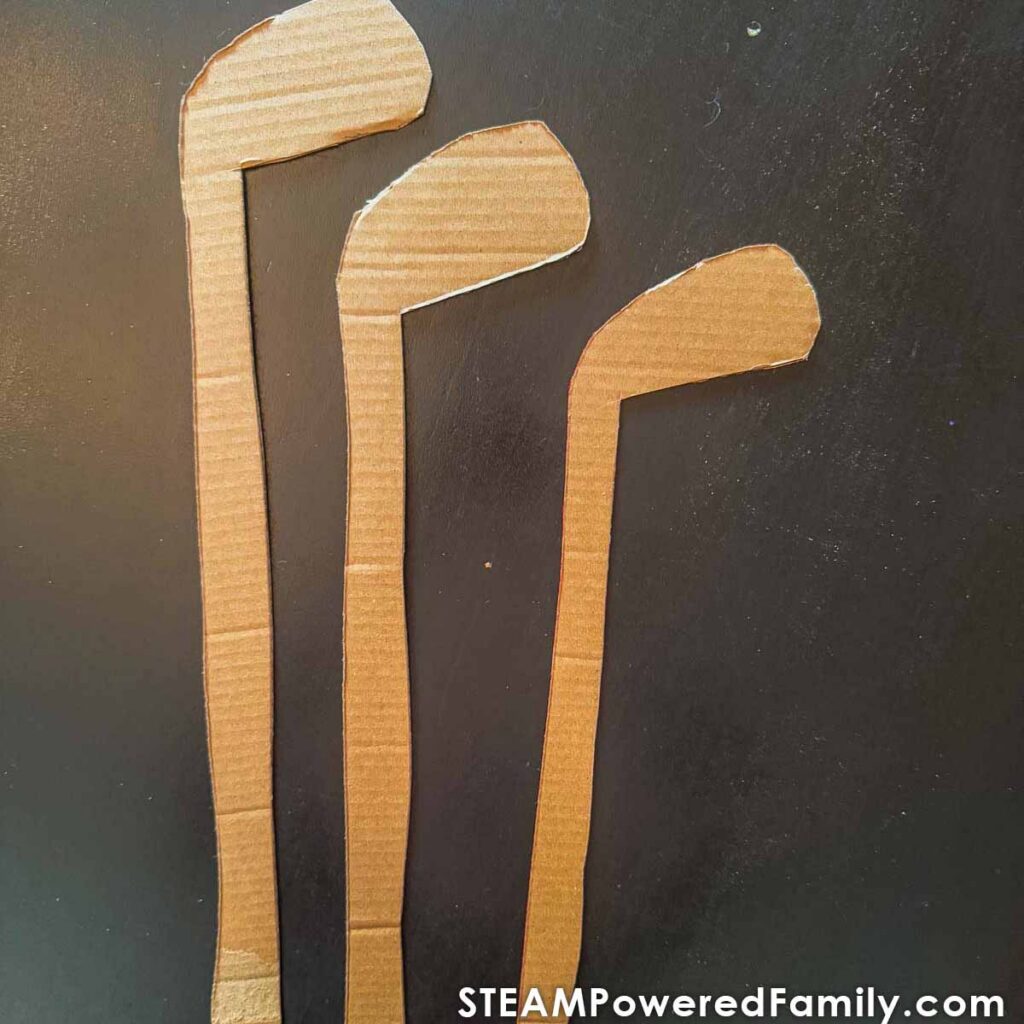
As far as the club, I had an actual putter on hand so the kids could see what it looked like. We talked about how the head of the putter was designed to hit the ball gently toward the hole. They tried rolling paper, they tried paper towel tubes taped together, but ultimately the kids wanted to trace the putter and try that way. They quickly realized that a piece of cardboard isn’t strong enough to hit a ball. So they retraced and cut a couple of more times and then glued and taped the pieces together to make a sturdy putter. This was an incredible STEM learning moment!
The kids and I had an absolute blast constructing these golf holes and clubs and then testing them out with each other. With this project touching on so many STEAM concepts it is definitely a hole in one in our book! Who knew DIY mini golf could be such a cool STEAM project? I hope that you will try this project out with your kids! The possibilities are truly endless and the fun – well that goes without saying!
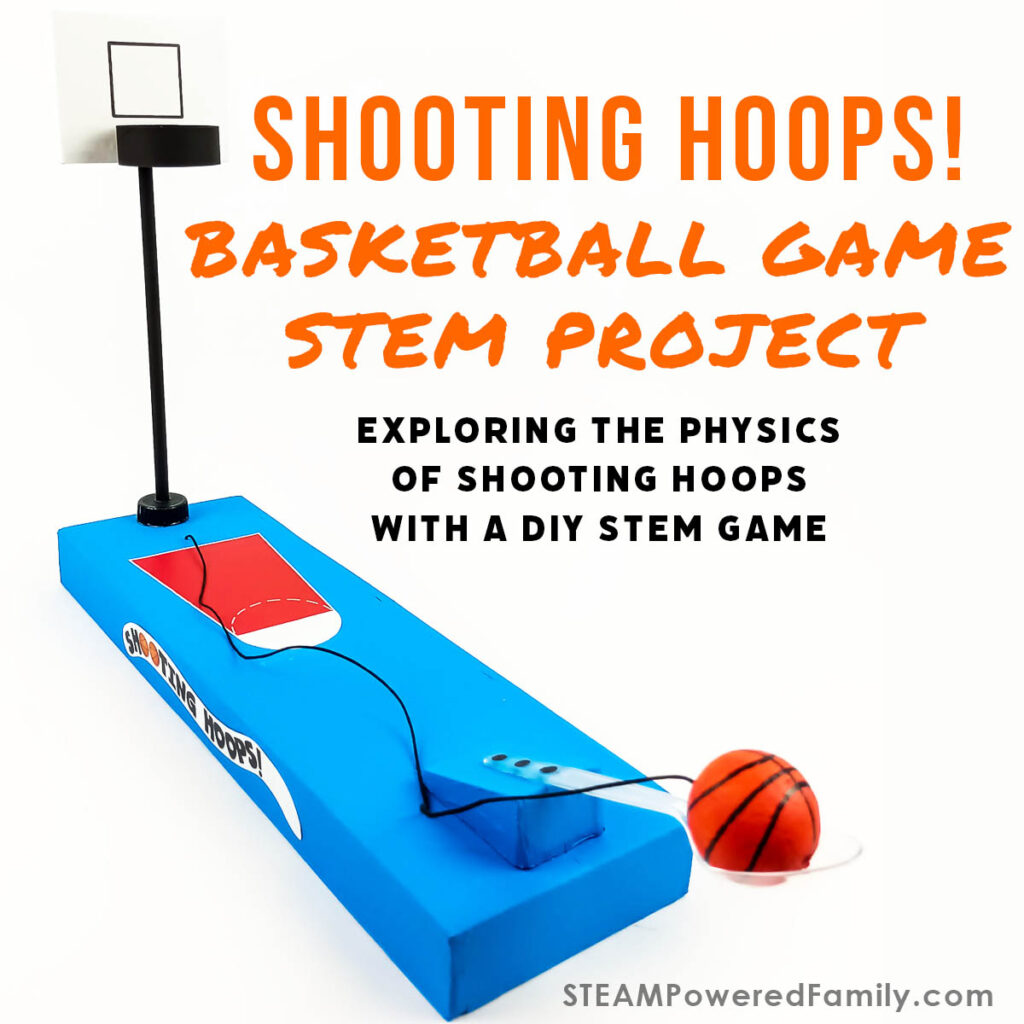
Basketball Sports STEM Alternative
Got a basketball lover in your life? Why not build a Basketball STEM Project? This project was a HUGE hit.