
Easy Cranberry Science for Kids
Fall is in full swing and the winter holidays are right around the corner. If you’re looking for an engaging, low-prep seasonal STEM challenge that will keep kids excited and learning, grab a bag or two of fresh cranberries and dive into these fun, hands-on cranberry STEM activities! These simple cranberry science experiments introduce concepts in physics, chemistry, and biology while encouraging critical thinking, problem-solving, and creativity. Kids will explore density, buoyancy, chemical reactions, and material properties using this festive fruit. Best of all, they tie in beautifully to the holiday themes.
Holiday STEM Fun with Cranberries
Table of Contents
Disclaimer: This article may contain commission, paid partnerships, or affiliate links. We independently review everything we recommend. When you buy through our links, we may earn a commission from qualifying purchases.
In total we have four different projects for you using cranberries. I recommend gathering supplies to do all four activities. You can set it up as centers, spread it out over a week, or let students pick their favorite activities.
What do we need?
You can complete all of these cranberry projects with just a few inexpensive materials:
- Fresh Cranberries
- Dried Cranberries
- A knife (for you, not the kids)
- Paper Plates
- Clear Vases or large cups
- Club Soda
- Baking Soda
- Cotton Swabs
- Paper
- Paintbrush
- Cranberry Juice
- Toothpicks
- Sugar
- Suacepan
- Wooden Spoon
Safety Note: Adult supervision is required for any steps involving knives, boiling liquids, or cutting fruit. Always review safe handling practices with students before beginning.
Project #1 – Do Cranberries Float or Sink… and Why?
Start by talking to the kids about density. Density is how much mass is packed into a certain amount of space.
For this experiment, fill a glass with water.
Have the kids hold a fresh cranberry and look at the outside. Ask students to make a prediction – will cranberries will sink or float? Then, with a show of hands, ask who thinks that the cranberries will sink and who thinks they will float.
Now it’s time to experiment! Drop in 5 or 6 fresh cranberries into the glass and watch what happens.
The cranberries will dunk into the water and then float back up to the surface.

The Science Explanation
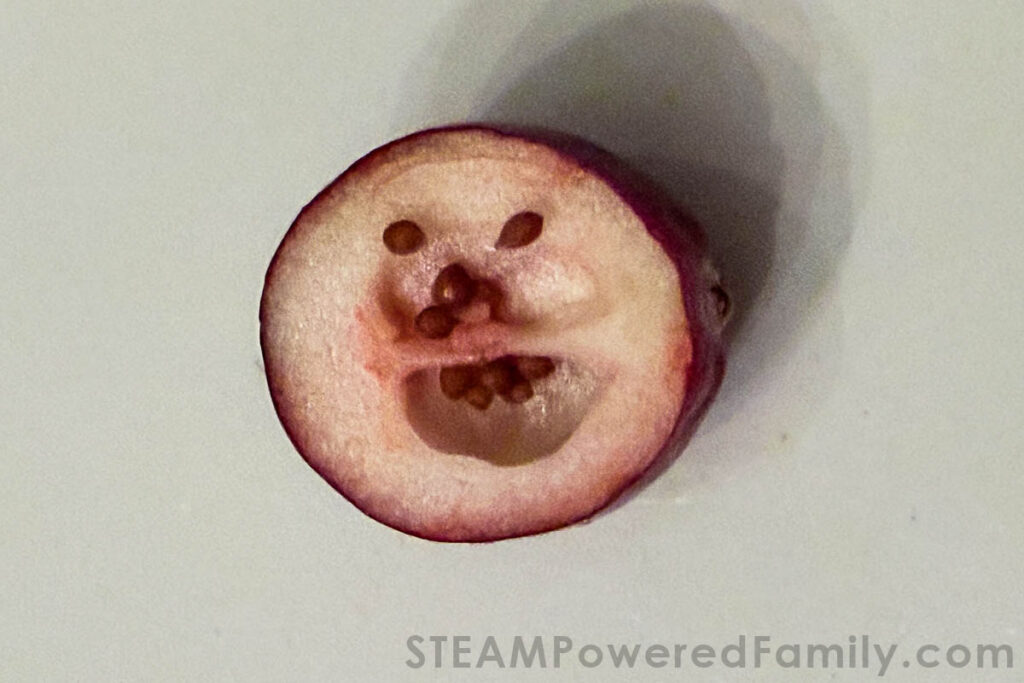
Why? Cranberries contain four small air chambers. These air pockets make the density of the cranberry less than the density of the water and therefore the cranberries float!
After you’ve watched the cranberries float, cut a cranberry in half for each student and have them make observations about what they see. As part of their inspection of the cranberry, as students to draw a picture of the outside and inside of the cranberry. Label parts like the skin, the flesh, the seeds and the air chambers that made them float.
Introduce new vocabulary with the term buoyancy. Buoyancy is the upward force of a liquid that helps an object float.
Project #2 – Let’s Make Dried Cranberries Dance!
So now that we’ve learned that cranberries float and why we can make the kids think even more when we make some dried cranberries sink and some dance.
Fill two glasses one with plain water and one with club soda (carbonated water). Ask the kids what they see that is different in the second glass. Show them dried cranberries and ask what they think will happen to these in the water.
Drop dried cranberries in the plain water.
They will sink immediately to the bottom. This is because the dried cranberries no longer have the air pockets that made the fresh cranberries float, so they are denser than the fresh cranberries.
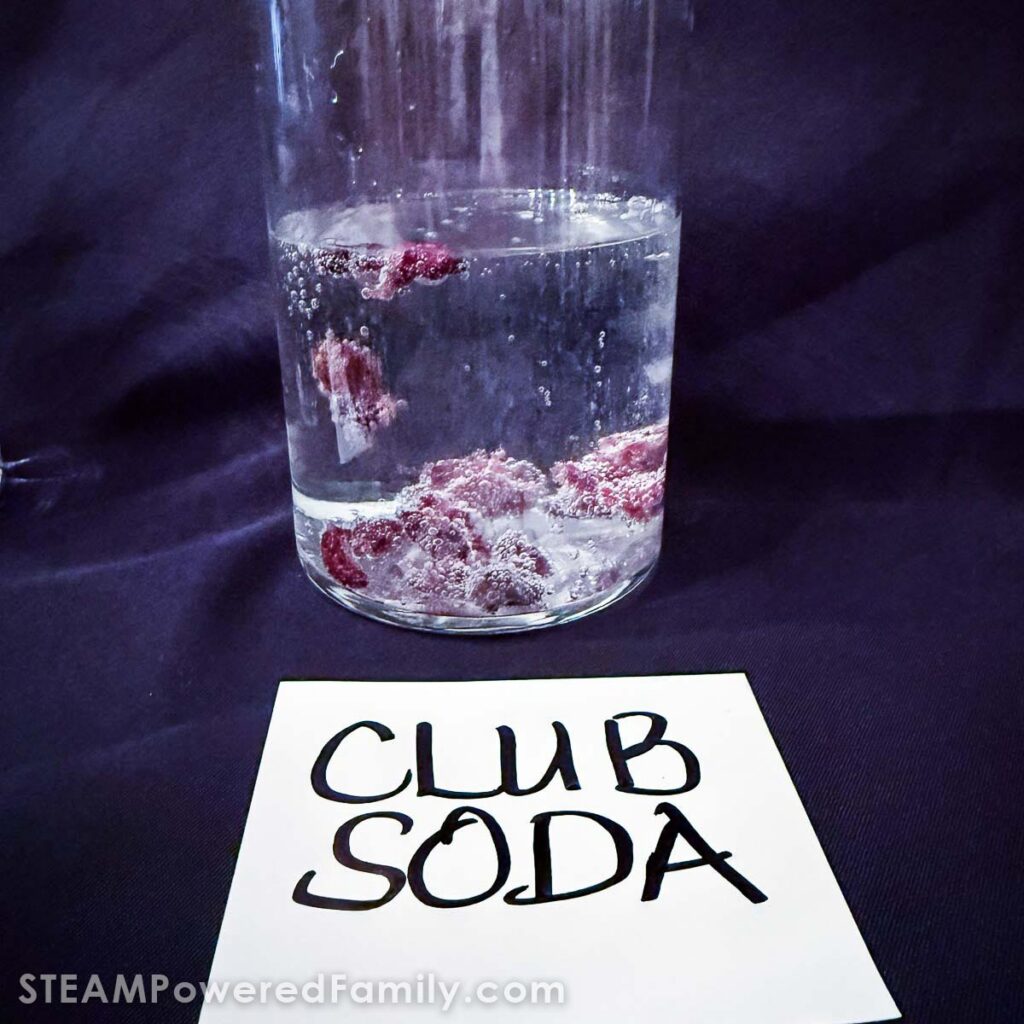
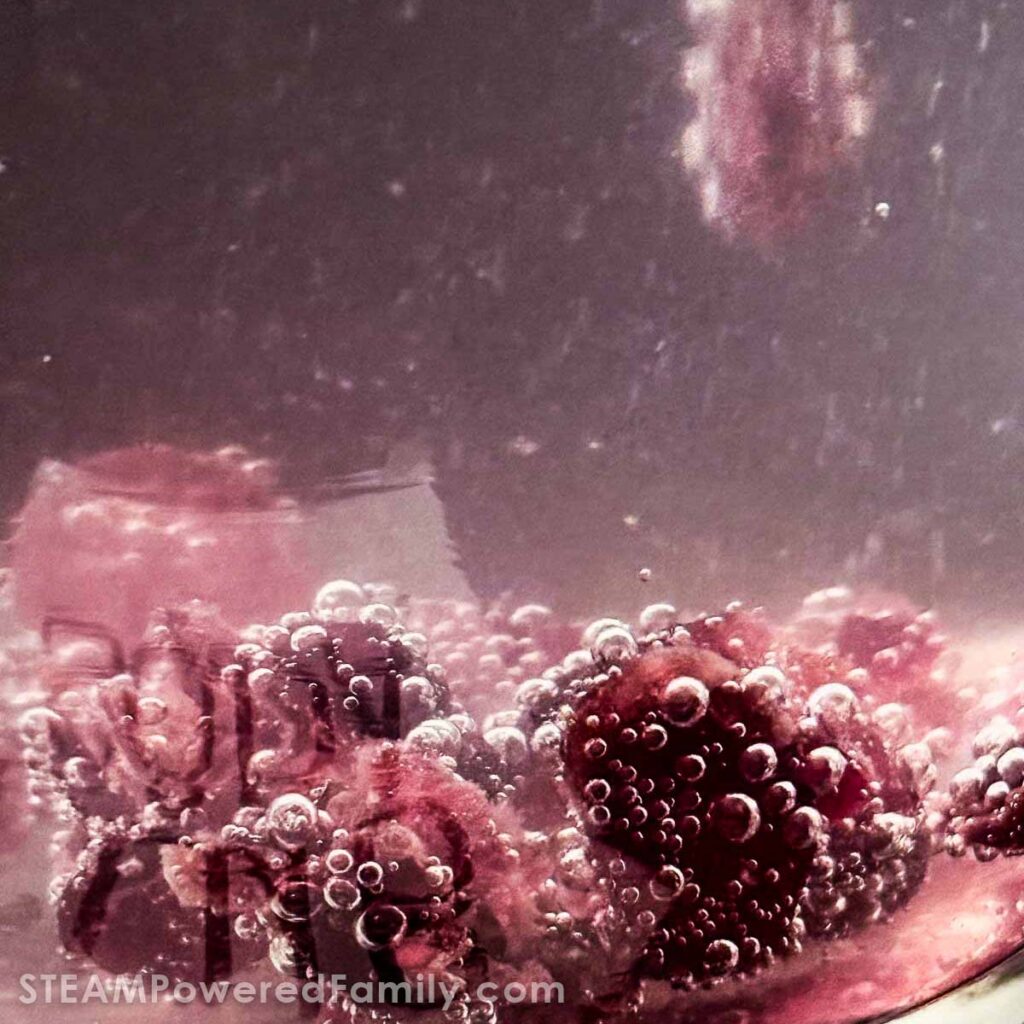
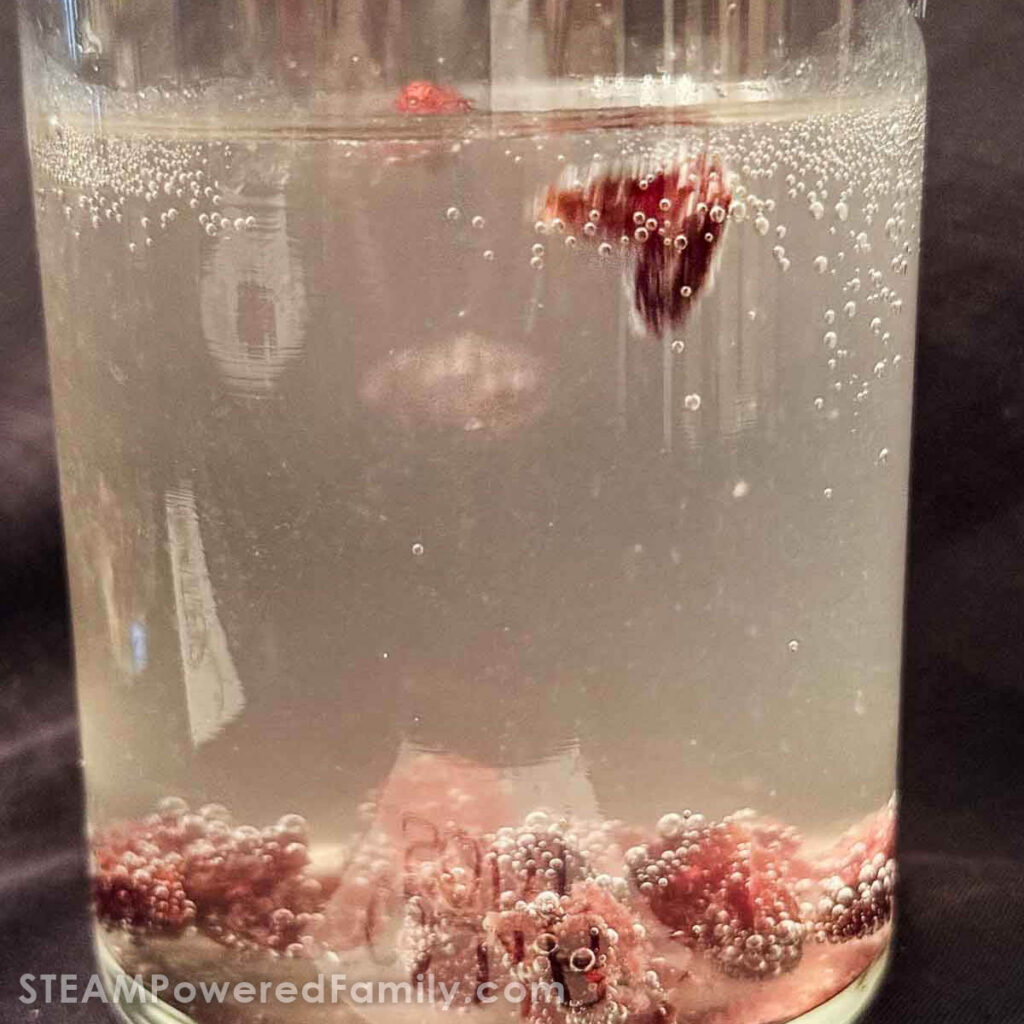
Now drop some dried cranberries in the carbonated water. When you first drop them in the cranberries will sink to the bottom, but very quickly, the bubbles in the club soda (carbon dioxide bubbles) will stick to the surface of the cranberries and they float to the surface, but then the bubbles pop and and they fall the bottom again before the dance will starts over again.
The Science Explanation
Why? In plain water, cranberries sink immediately. But in club soda, bubbles of carbon dioxide cling to the berries, carrying them upward. When the bubbles pop at the surface, the cranberries sink again, creating a “dancing” effect. The carbon dioxide bubbles act like tiny balloons, temporarily reducing the cranberry’s density and making it float, at least until the bubbles burst and it sinks again.
Project #3 – Invisible Ink Messages with Cranberries!
Cranberries are packed with anthocyanins, colorful plant pigments that also act as natural pH indicators. These pigments can reveal secret messages when combined with a base like baking soda.
And we love our invisible messages around here! Check out this other invisible message project.
So how do we do it?
Dissolve some baking soda in warm water and use cotton swabs to write messages on white paper with the “ink” you created. This will leave an alkaline or basic substance on the paper. Let it dry completely.
Once it’s dry use a paintbrush to brush cranberry juice over the message. Watch your message be magically revealed!
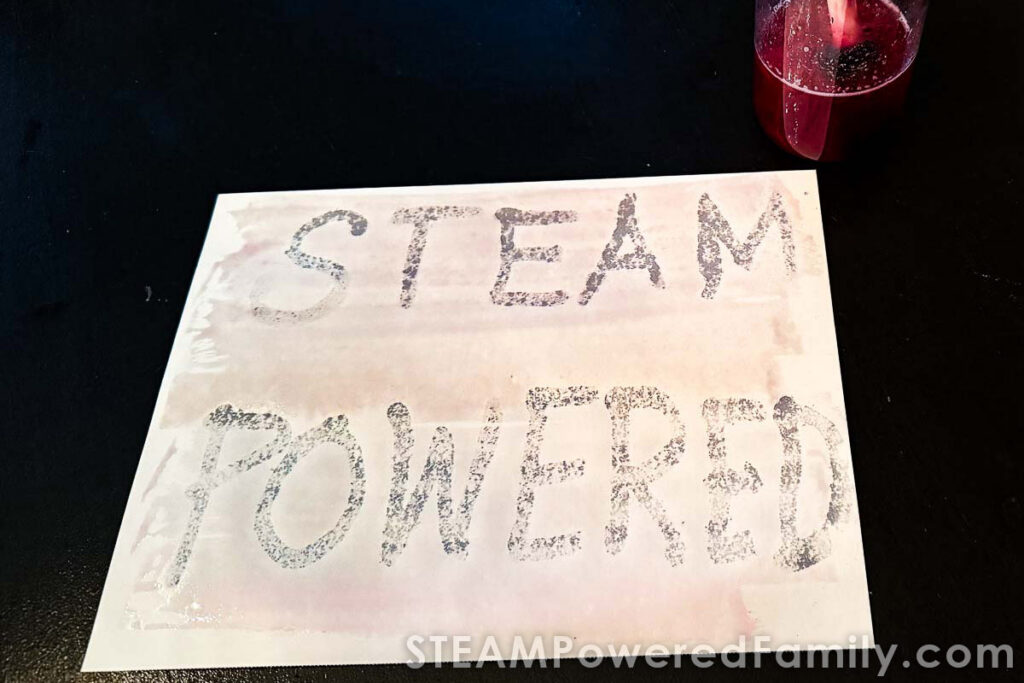
The anthocyanins in the juice react with the alkaline baking soda, changing color and revealing the hidden writing, a perfect way to combine chemistry and creativity!
Project #4 – Cranberry Toothpick Engineering Challenge
This engineering challenge tests students’ design, balance, and fine motor skills.
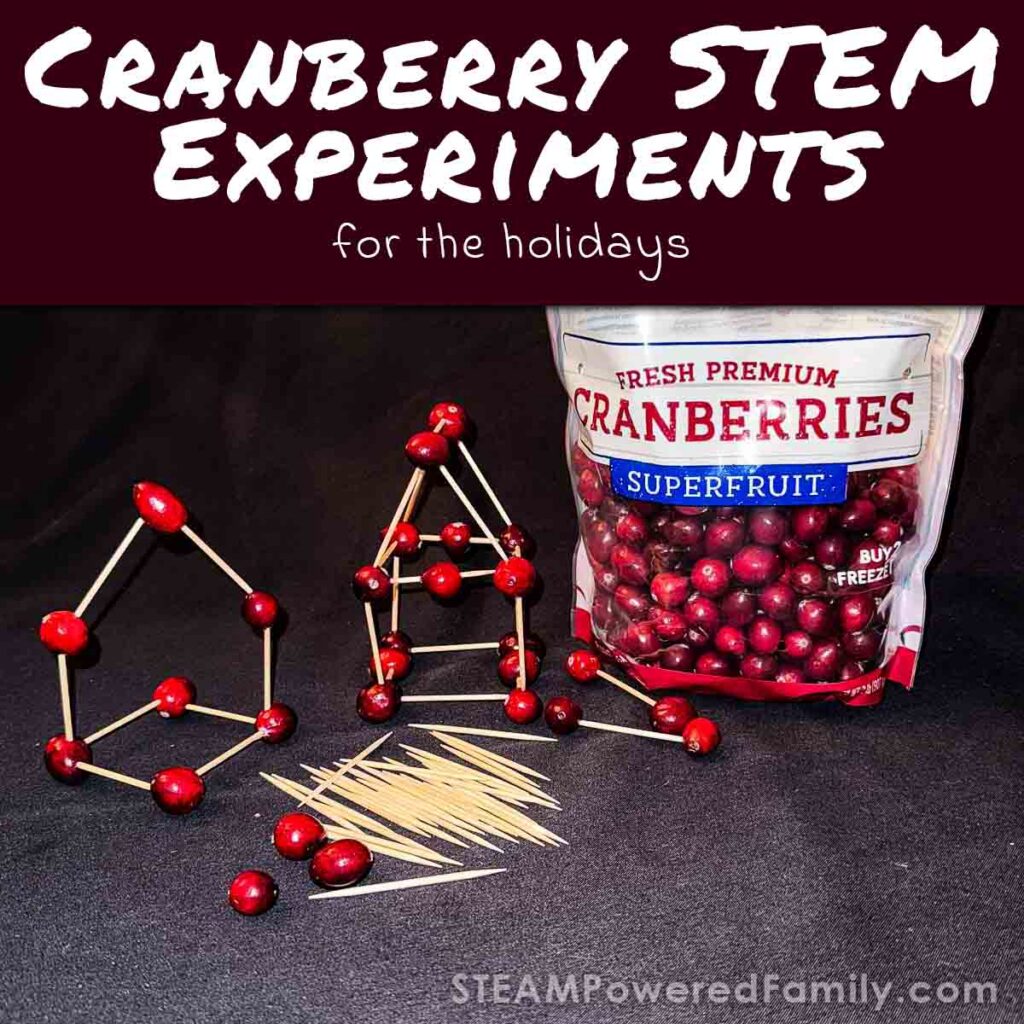
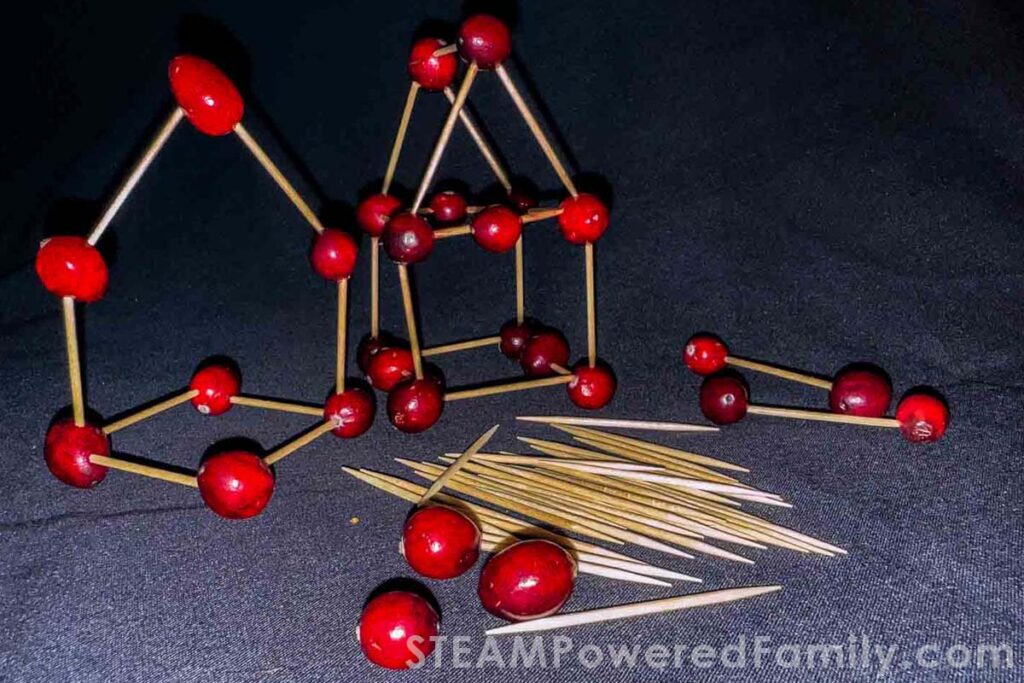
Ask the students to use only toothpicks and cranberries to build a structure – you could put restrictions or parameters based on the ages you’re working with.
As with any building challenge ask, “What makes a strong and stable structure when building with cranberries and toothpicks?” The answer involves geometry. Explain that triangular frameworks and wide, balanced bases are key for strength and stability. You can extend the challenge by asking students to measure height, weight, or the number of cranberries used to integrate a math component.
Project #5 – The Science of Cranberry Sauce
Have the kids make some home made cranberry sauce and try it for some tasty kitchen science.
The science of making cranberry sauce is a simple, yet fascinating, demonstration of polymer chemistry and gelation with just cranberries, sugar, and water.
Start by dissolving a cup of sugar in a cup of water in a saucepan and bring the mixture to a boil. Once it is boiling, add your cranberries. This will trigger a physical and a chemical change. When the cranberries are heated, the water inside them turns to steam. This will cause the skin to pop open and release the flesh and seeds into the sugar mixture.
When this happens there is a chemical release of pectin which is a naturally occurring polymer in cranberries. Pectin is a long chain of sugar molecules that acts like a glue and gives raw fruit its firm structure. When the cells burst from the heat, the pectin chains are released into the surrounding liquid. This pectin will make the sauce more jelly-like as it cools. As the sauce boils, water turns into steam and evaporates which causes the mixture to become more concentrated. As the mixture cools, the motion of the water molecules slows down, allowing the pectin chains to become a stable, semisolid gel.
These quick and simple cranberry STEM activities show that great science doesn’t require fancy equipment, sometimes it’s right in your kitchen! Whether used for a fall classroom lesson, a Thanksgiving science center, or a holiday family project, these activities make seasonal learning fun and memorable.