

Back to School STEM Ice Breakers
A fresh new school year is on the horizon. As we as parents and educators know, any new start comes with new challenges. With all of the back to school excitement and nervousness about a new year, offering some ice breakers STEM activities is a perfect way to get everyone to know each other, to build a classroom community, to encourage teamwork and have fun! It will make for a truly memorable start to the year!
STEM Icebreakers to Get the Kids Hyped for Back to School
Table of Contents

Disclaimer: This article may contain commission, paid partnerships, or affiliate links. We independently review everything we recommend. When you buy through our links, we may earn a commission from qualifying purchases.
Why Ice Breakers?
Traditionally, ice breakers are used for introductions, to give a low pressure start to an event. They encourage everyone to participate, promote shared connections, common focus and can energize the group reducing the anxiety that can come with different settings. Icebreakers are great for kids in a classroom for many of the same reasons, and offering icebreakers that are high engagement, low pressure will:
- Build Community: It encourages kids to get to know each other and the teacher without awkward forced introductions and on the spot thinking.
- Reduce Anxiety: When everyone is participating it can help nervous and shy students feel comfortable and included.
- Encourage Participation: When we start with a fun, small scale, kids are more likely to participate without worry.
- Boost Engagement: Team building exercises can kick start energy and excitement in your classroom, especially at the beginning of a new topic or day.
- Develop Social Skills: These projects provide opportunities for kids to work on their communication skills, cooperation and critical thinking skills!
WHAT ARE STEM ICEBREAKERS?
STEM icebreakers are simple projects using stem concepts that require teamwork to complete. STEM offers the kids a collaborative, hands on alternative to more traditional types of icebreaker activities. They feel more like games and are the perfect choice for memorable back to school activities! Another important consideration, STEM activities appeal to different learning styles like kinesthetic (hands on), visual (seeing their learning), logical(needing the how, what, why) and can be adapted for various abilities, making them great for all students, including those who might be shy or neurodivergent! STEM is a win all the way around.
STEM Icebreaker Ideas
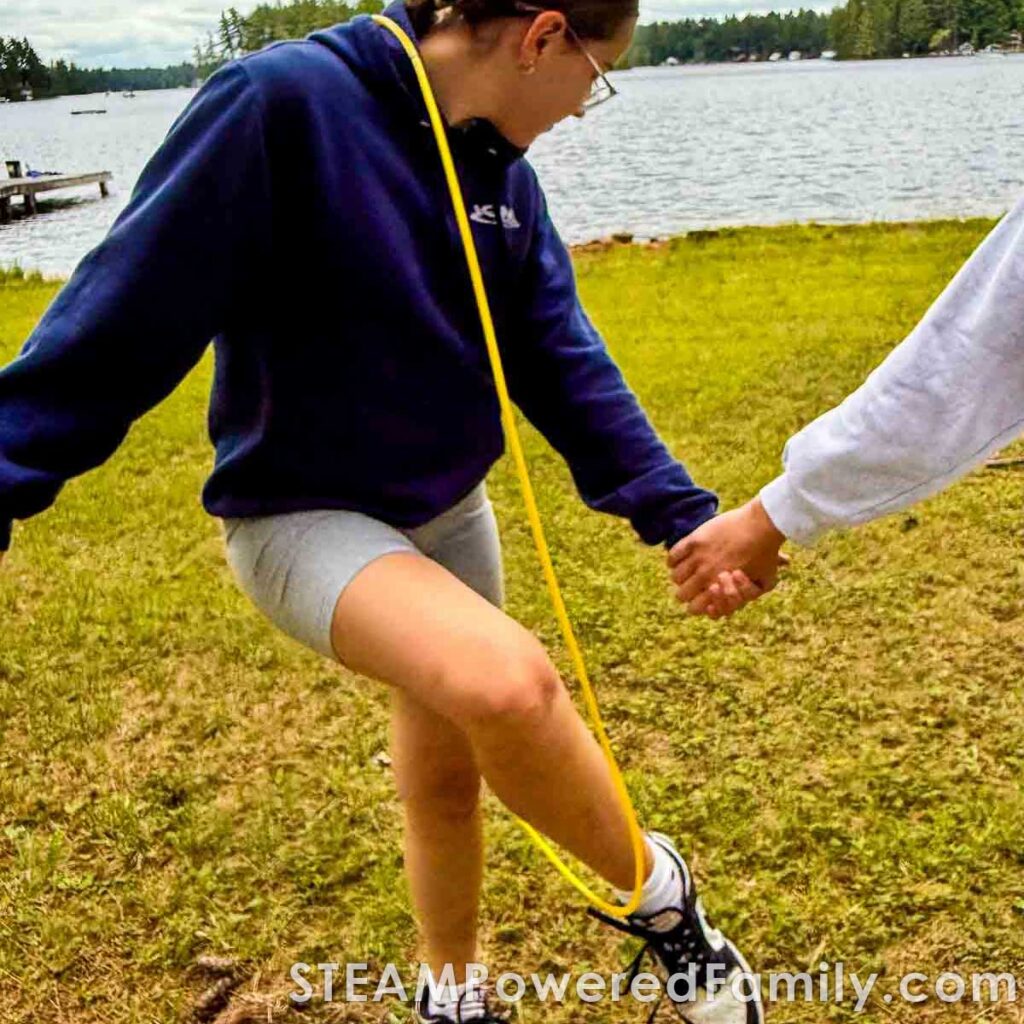
PASS THE GROUP THROUGH THE HULA HOOP
For this challenge the group will need to get in a circle and hold hands. Pick a student to be the starting point and place a hula hoop over their hand so that the hoop is hanging on the hand of the starting person. The challenge, you need to pass the hula hoop all the way around the circle without letting go of hands. This will require some thinking and cooperation for the best way to accomplish the task.

STEM Connection
Force, Motion and Gravity as well as cooperation, communication and critical thinking – all key concepts in STEM!
For a fun twist, check out the index card challenge in No Prep Paper STEM Projects!
ROCK, PAPER SCISSORS RELAY
Split the group into two teams. The goal is to get to the opposite team’s starting point. The first person in each line runs toward each other – when they meet up they play a round of rock paper scissors. Winner keeps going, the loser goes back to the end of their line. Play continues until someone reaches the other team’s start line and they are awarded a point for that round. You can play a set number of rounds or the first team to a certain number of points.

STEM Connection
Probability, Cyclical Reasoning (How rock breaks scissors, scissors cut paper, paper covers rock), game theory, even coding concepts like conditional logic “if then”.
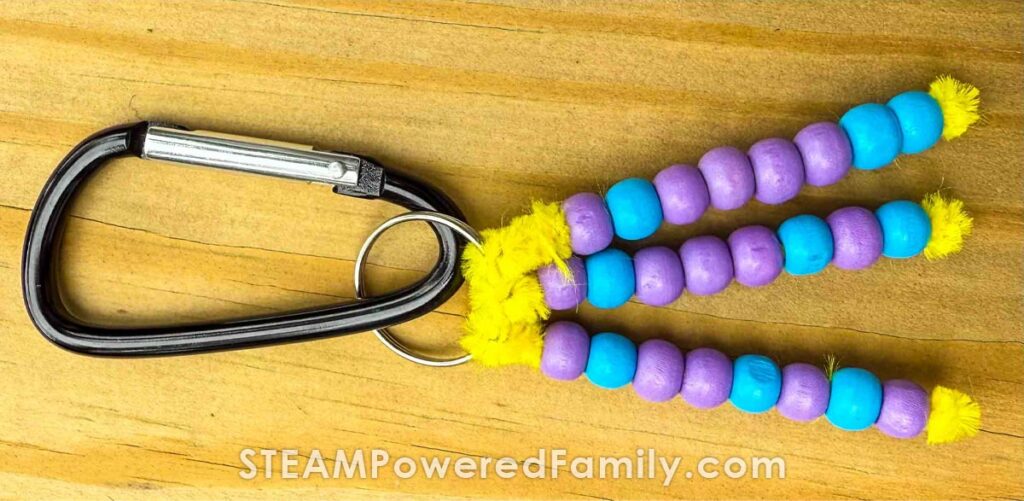
BINARY CODE BACKPACK TAGS
Binary code is the way a computer understands what it needs to do by using the code for reading and relaying information. If something is ‘binary’, it is consisting of 2 parts. In the case of code, the bi refers to zeros and ones, which are the only two numbers that make up binary code. It is made up of a sequence of eight numbers that relates directly to a letter in the alphabet. For example, 01000001 is the binary letter capital A.
Supplies
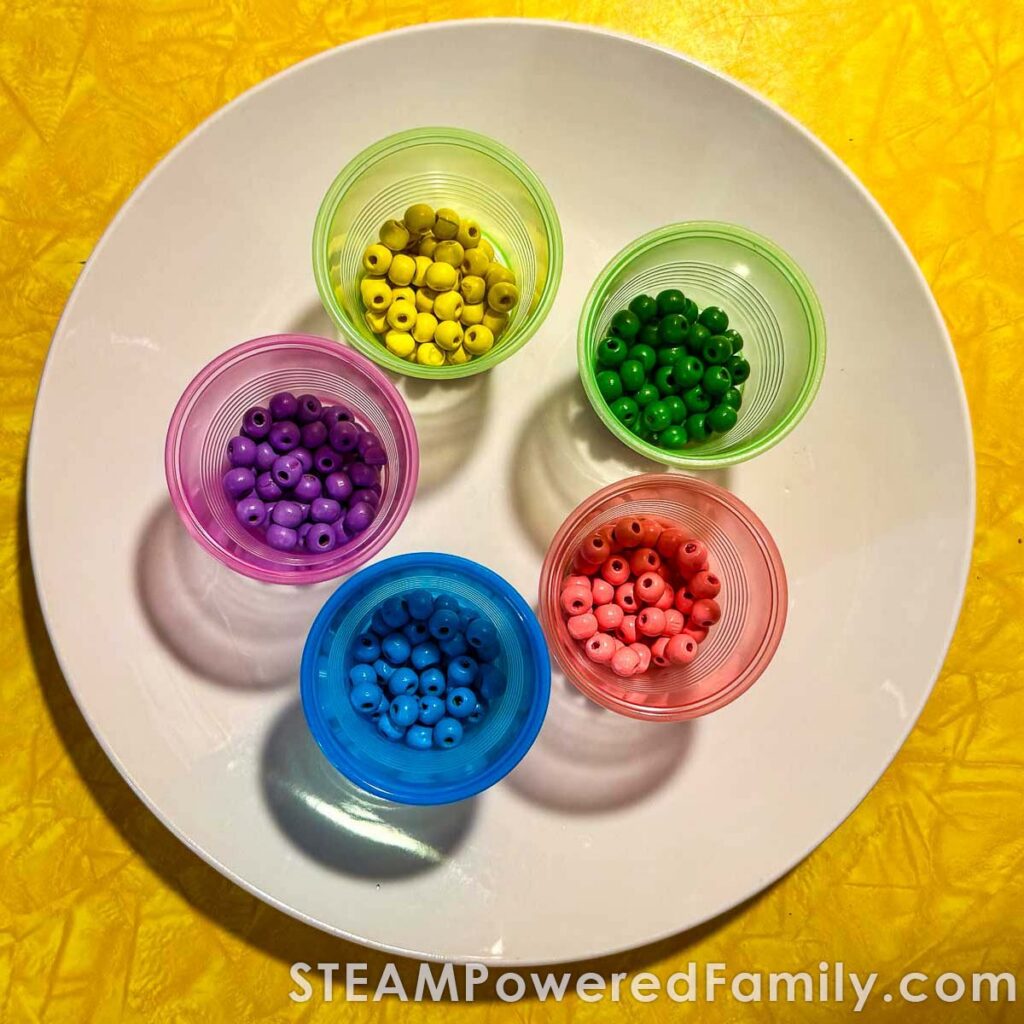
For this project you will need key rings (also known as split rings), 2 colors of wooden or plastic beads, pipe cleaners, a binary code sheet, a blank sheet of paper and two colored markers. We also used carabiners to make it easy to attack to kids’ bags.
If you don’t have a Binary Code sheet, you can grab one through this form.
Directions
Have the students decide what they would like their tags to say. It could be their name, their initials or a favorite word. It’s really up to them.
Have them use their code sheet, blank sheet and markers to plan out their tag. Doing this before building the tag can eliminate some frustration if they lose their place among the zeros and ones while they’re working.
Next, loop one end of the pipe cleaner around the key ring and twist it so it is secure. String the beads onto the pipe cleaner to form the first letter. When it is complete, knot the end so the beads don’t fall off and snip off any excess. Repeat the process for each additional letter they want. When they’re done they can loop the keyring onto their backpack zipper.
STEM Connection
The coding part is definitely the core concept but it also requires critical analysis of the code. As an extension activity, have the kids decipher each other’s code. The tags will be a reminder all year of their first day and the kids will love sharing the code with other kids encouraging conversation and engagement. You could laminate little binary code tags so they can teach others too.
If you like this binary code idea – you can find more here: Binary Code Projects!
For a more advanced backpack tag project for your older students, try metal stamping!
MAKE A PERSONALIZED WORD SEARCH PUZZLE
Using Google Sheets or a similar program – send students a template for their own word search. It is super easy to make and you can even have your kids make their own. Here is what it looks like:
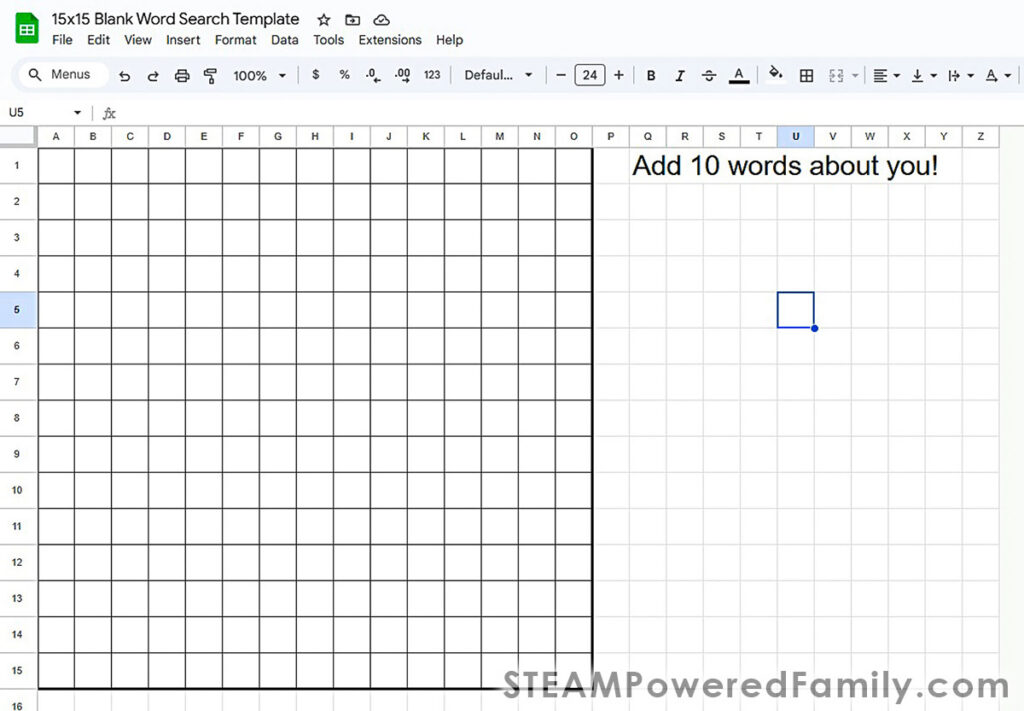
Have the kids add 10 words about them to the right side of the puzzle grid, and then place them in the grid. Make sure one of the words is their name. They could use their name, their age, favorite game, favorite sports, favorite subject, etc.
Once they hide their words they can fill in the rest of the spaces with random letters. If you want a fun computer tie in, have them use the formula to add a random letter in the empty spaces either by copy and paste or click and drag. The formula is =CHAR(RANDBETWEEN(65,90)).
When they are done you can print off copies of the puzzles and trade them among the class. Kids will get a chance to learn about their classmates while completing the puzzles. Creating the puzzle with Google Sheets and the formula gives a nice computer science tie in!
TOWER TASKS
There are so many different Tower Building Projects that you can give students to get them thinking and working together. The great thing about tower challenges is that they are low prep, low cost and big reward. You can use them to start things off or keep them in your back pocket for when you see you need a challenge. You can also put restraints on building that promote cooperation and creativity.
The Tallest Tower
Using blocks like KEVA planks or other classroom blocks or grab some disposable cups, challenge the kids to build the tallest tower they can without it falling over.

Or challenge them to build the biggest wall they can! This is a great team building challenge for the whole class to take part in.

STEM Connection
Kids need to understand and work on balance, foundation building, gravity and spatial awareness.
Extra Challenge
Tell students they can only use one hand while building, blindfold the builder and have the other students direct them, give them only a certain number of blocks so they have to situate them carefully to build higher.
Index Card Towers
Which team can build the tallest structure in 20 minutes with only 25 index cards. No scissors or tape allowed – just the cards and some ingenuity. The kids may try to build it like a playing card tower but may quickly realize the key to stability may be to bend the cards.

STEM Connection
The same STEM connections hold true in this challenge with the added challenge that moving too quickly near index cards can add a “wind” element that can be a challenge with such a lightweight building material.
If you love this type of challenge you should check out No Prep Mini Building Challenges!
Taking the pressure off of getting to know one another and making the beginning of the year creative, fun and unforgettable is definitely the way to get the year started off right! I hope you and all of your students have an amazing back to school season!