DIY Stethoscope Project for Kids
Looking for an innovative way to engage students in both biology and physics? This DIY stethoscope project offers a hands-on, cross-curricular activity that brings human anatomy and sound science to life with some incredible opportunities for learning and discovery. Whether you’re building out a unit on the human body or exploring how sound travels through materials, this lesson checks all the boxes: low prep, budget-friendly, inquiry-driven, and deeply engaging.
DIY Stethoscope STEAM Project
Exploring Sound & Biology in the Classroom
Table of Contents

Disclaimer: This article may contain commission, paid partnerships, or affiliate links. We independently review everything we recommend. When you buy through our links, we may earn a commission from qualifying purchases.
Students will construct their own working stethoscope using simple materials and explore how doctors use this tool to monitor heart, lung, and body sounds. Along the way, they’ll learn how sound travels, how amplification works, and how design impacts function. It’s a perfect example of STEAM in action, where engineering design meets human biology and physics.
Curriculum Links
This activity integrates beautifully with curriculum areas such as:
Human Body Systems (Health & Biology): Focus on the cardiovascular and respiratory systems
Sound & Vibrations (Physics): Explore how sound waves travel through solids and air
Engineering Design (STEM/STEAM): Prototype, test, evaluate, and refine a functional tool
Scientific Method: Conduct experiments with variables and record observable data
The hands-on nature of this project makes it ideal for Grades 4–8, though it can be adapted up or down with guided discussion and simplified modifications.
DIY Stethoscope Video Tutorial
Watch as we build our Stethoscope in our video tutorial. If you can’t see the video due to your firewall settings, please visit the STEAM Powered Family YouTube Channel to see it there.
Materials Needed
Most of these items can be sourced from classroom supplies, recycling bins, or hardware/pet stores:
Plastic funnels (different sizes for testing)
80 cm of medical tubing or aquarium tubing
1 “Y” connector for tubing
Earbud tips
Balloons
Scissors
Ruler
Duct tape or strong adhesive tape
How to Build the Stethoscope
Prepare tubing
Cut one length of tubing to 30 cm and two more to 24 cm. Trim the narrow ends off two balloons.
Insert the two shorter tubes into the top of the “Y” connector and the longer tube into the base. Use tape if connections are loose—airtight seals are critical for sound transmission.
Attach the funnel
Slide the large funnel onto the free end of the long tube. Tape it securely. Stretch a balloon tightly over the funnel’s wide mouth. Tapping it should produce a drum-like sound.
Add ear attachments
Affix the earbud tips to the ends of the short tubes. They help with comfort and sound isolation, though they’re not essential.

Test and observe
Have students test their stethoscope by listening to their heartbeat or the ambient sounds of the classroom. Then, swap the large funnel with a smaller one and note the difference in sound clarity and amplification. Repeat with another size if you have more.
Encourage students to hypothesize: Why did the sound change? What role does funnel size or balloon tension play?
Learning Outcomes
By completing this project, students will:
- Understand how sound waves travel and how they’re amplified
- Investigate the function and structure of the heart and lungs
- Apply basic engineering and problem-solving skills
- Explore the connection between medical tools and the science of sound
- Practice scientific observation and communication
Extension Activities
There are so many fun ways you can expand on this activity.
Heartbeat Experiment – Record resting and post-activity heartbeats using the stethoscope. Students can graph their results and explore how activity affects heart rate.
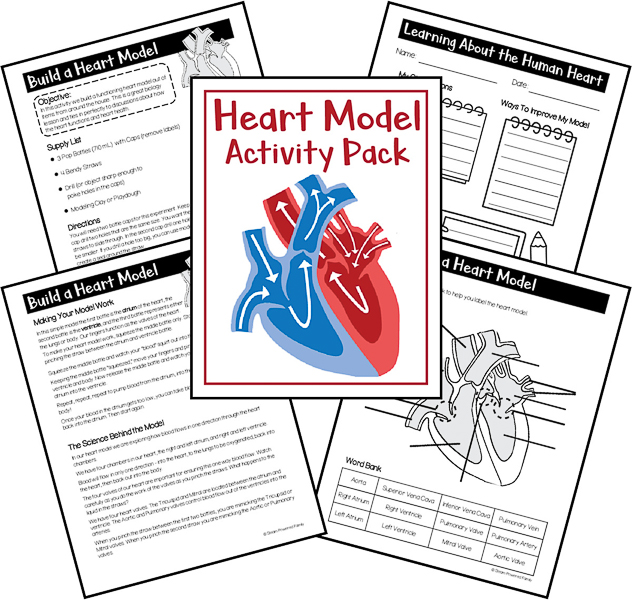
Build a Model – Build a Heart Model that actually “beats” and moves blood, and build a model of blood vessels and blood.
Build a Lung Model – Doctors also use stethoscopes to listen to the lungs. Listen to lungs working then build a lung model.
Sound Wave Investigation – Test different materials like plastic wrap, fabric, or paper as diaphragms to see how they affect sound clarity. This ties into discussions about sound absorption and reflection.
Design Challenge – Have students iterate on the stethoscope design. Can they improve amplification or comfort? Encourage testing and redesign.
Compare Heartbeats – With consent and supervision, students can listen to classmates’ heartbeats or even pet heartbeats if done at home. Discuss differences in rhythm, speed, and strength.
History of the Stethoscope – Integrate a short research component: When was the stethoscope invented? How has it evolved? Let students present timelines or short reports.
Heartbeat Art – Transform data into expression! Students can create abstract art inspired by the rhythm and sound of their heartbeats, blending art with science.
Make Heartbeat Inspired Music – Why not build a simple drum and make music inspired by heartbeats.
Tips for Educators
Pair students for testing to promote collaboration and shared observations. Ensure all the students are comfortable with this contact before proceeding with the pairings.
Vocabulary Building: Have students explain how their stethoscope works using vocabulary like “diaphragm,” “amplification,” and “vibration.”
Connect to Real-World Careers so students can begin to see how their lessons connect to jobs people do every day. Discuss how doctors, EMTs, nurses, and even veterinarians rely on stethoscopes and how innovation in design continues to improve their ability to diagnose heart conditions.
Support Neurodivergent Learners: Offer ear protection options for those sensitive to sound, and consider adding visual aids showing heartbeat patterns.
Curriculum Connections
Science (Biology): Human Body Systems, Circulatory and Respiratory Systems
Science (Physics): Sound Waves and Vibrations, Transmission of Energy
Technology/Engineering: Design Thinking, Building Prototypes, Testing and Redesign
Cross-Curricular Options:
Art: Interpretations of sound through visual mediums.
Health: Discussion of fitness and heart rate. This would be a great activity to pair with a physical education class.
Math: Graphing heart rate data and analyzing changes.
This stethoscope project is an engaging and fun, integrated learning experience that helps students really connect with how their bodies work. Have fun exploring and learning about the human body!
Printables
Looking for some printable activity packs to go with this project? Check out this very popular printable available on TpT.