

How to Make a DIY Water Filtration System: An Easy STEM Experiment for Kids
Have you ever looked at a muddy puddle and wondered how on earth that water could ever become clean? In this fun DIY Water Filtration System STEM project, children get to step into the shoes of environmental engineers and discover how filtration helps remove dirt and other visible impurities from water.
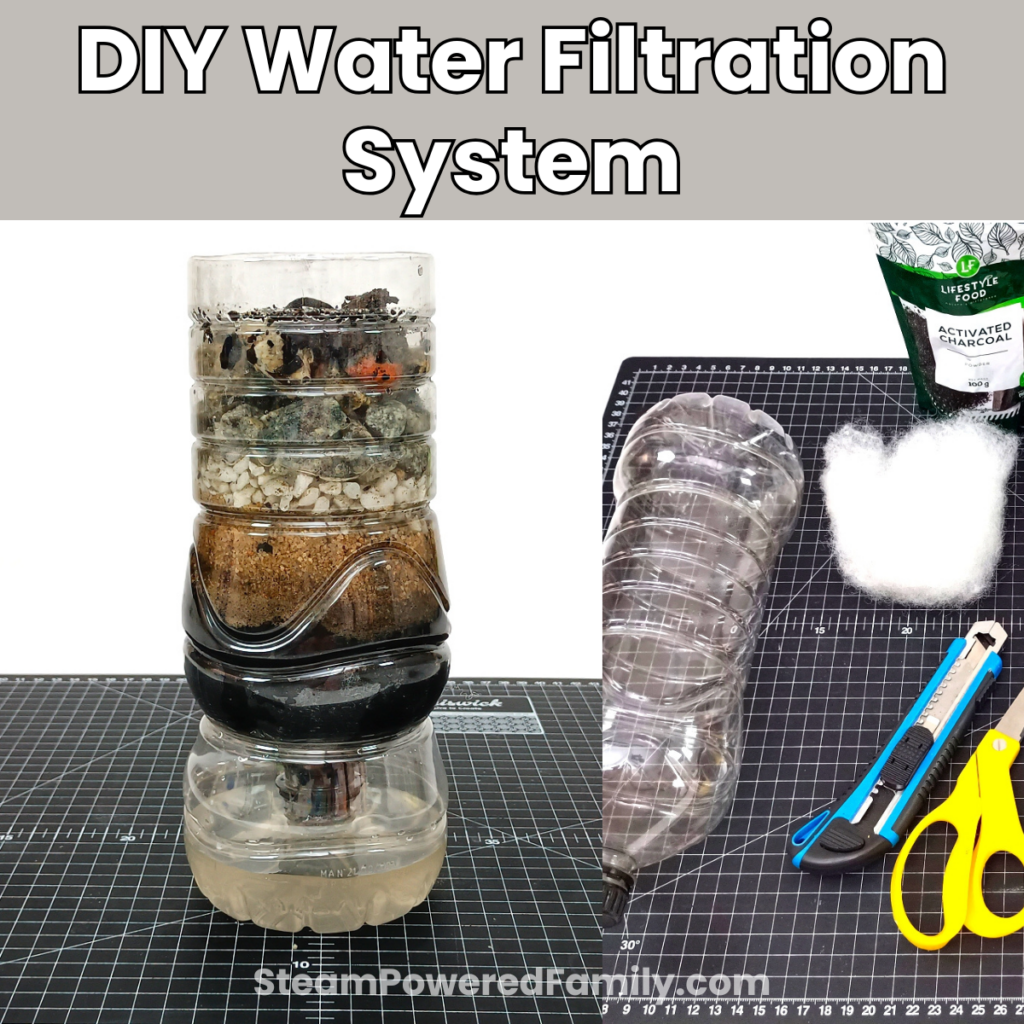
Aside from Environmental Science and water treatment principles, other STEM Concepts learnt in this valuable lesson are engineering design and observation skills.
By building a simple water filtration system from common everyday materials, like cotton, sand, gravel, coffee filters, and recycled plastic bottles, learners can understand this important scientific process that communities around the world rely on every day.
They can watch the dirty water pass through different layers of filtering materials, making it appear cleaner by removing the contaminants in the water, which is a key step in providing clean water and should not be consumed yet.
This activity is about much more than making muddy water look cleaner. Through observation, experimentation, testing different materials and problem-solving, students learn how natural and human-made filtration systems work while developing important scientific inquiry skills.
They’ll record observations, compare results, evaluate the effectiveness of different filter designs, and discover how engineers use similar principles to solve real-world challenges involving water treatment and environmental sustainability.
The project also opens the door to meaningful discussions about water conservation, access to clean drinking water, and the systems cities use to treat water before it reaches our taps.
It’s a wonderful reminder that something we often take for granted, clean water, is the result of clever science, thoughtful engineering, and continuous innovation.
One more thing before you start! I have created a free printable predictions and observations worksheet to go along with this experiment. Grab it below and have one ready for each learner before you begin.
So, let’s get on with building a water filtration system to understand how easy it is to make dirty water clean!
How to Build Your DIY Water Filtration System (Step-by-Step)
Table of Contents
Disclaimer: This article may contain commission, paid partnerships, or affiliate links. We independently review everything we recommend. When you buy through our links, we may earn a commission from qualifying purchases.
You can either follow the instructions below or watch the video here on YouTube and build with me step-by-step. If you can’t see the video due to your settings, visit our YouTube channel.
Materials You Will Need for Your DIY Water Filtration System
- Empty 1.5L or 2L cooldrink bottle
- Polyester batting or cotton wool
- Activated charcoal
- Fine play sand
- Medium-coarse sand
- Small Bonsai stones or very small, crushed pebbles
- Medium size stones
- Large stones
- Craft knife
- Scissors
- Jug of dirty water
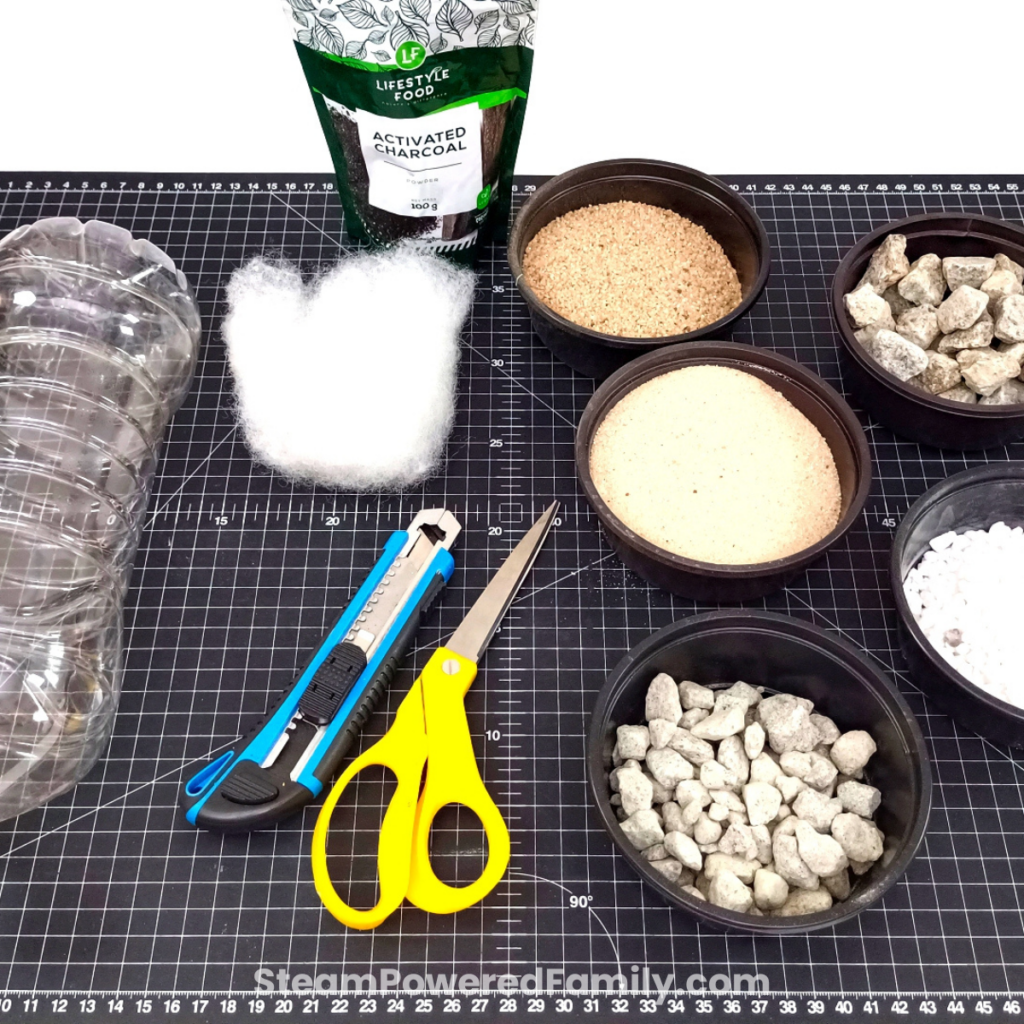
LET’S BUILD AN EASY WATER FILTRATION SYSTEM!
Step 1: Cut the Bottle
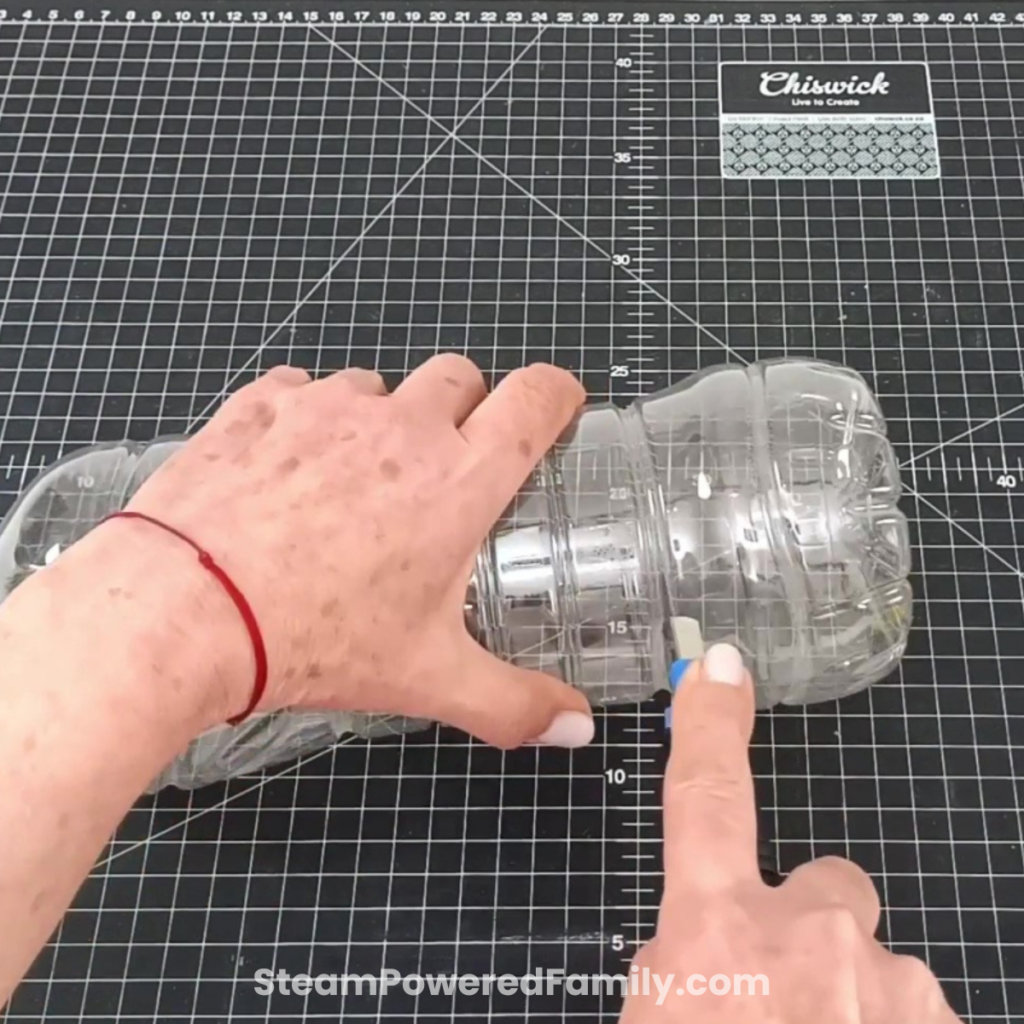
Using a craft knife, cut about 1/3 of the bottle off the bottom of the empty bottle. This is where the clean water will come out of the filter to.
Ask an adult for help doing this or remember to keep your fingers away from the blade of the craft knife.
Step 2: Add the Cotton or Polyester Filter Layer
Remove the lid of the bottle and push a piece of the polyester batting or cotton wool into the hole from the bottom.
The polyester batting is a better choice for this experiment as it does not degrade or rot once wet.
Replace the lid and push the rest of the batting into the bottle from the top.
Step 3: Pour the Filtration Layers Into the Bottle
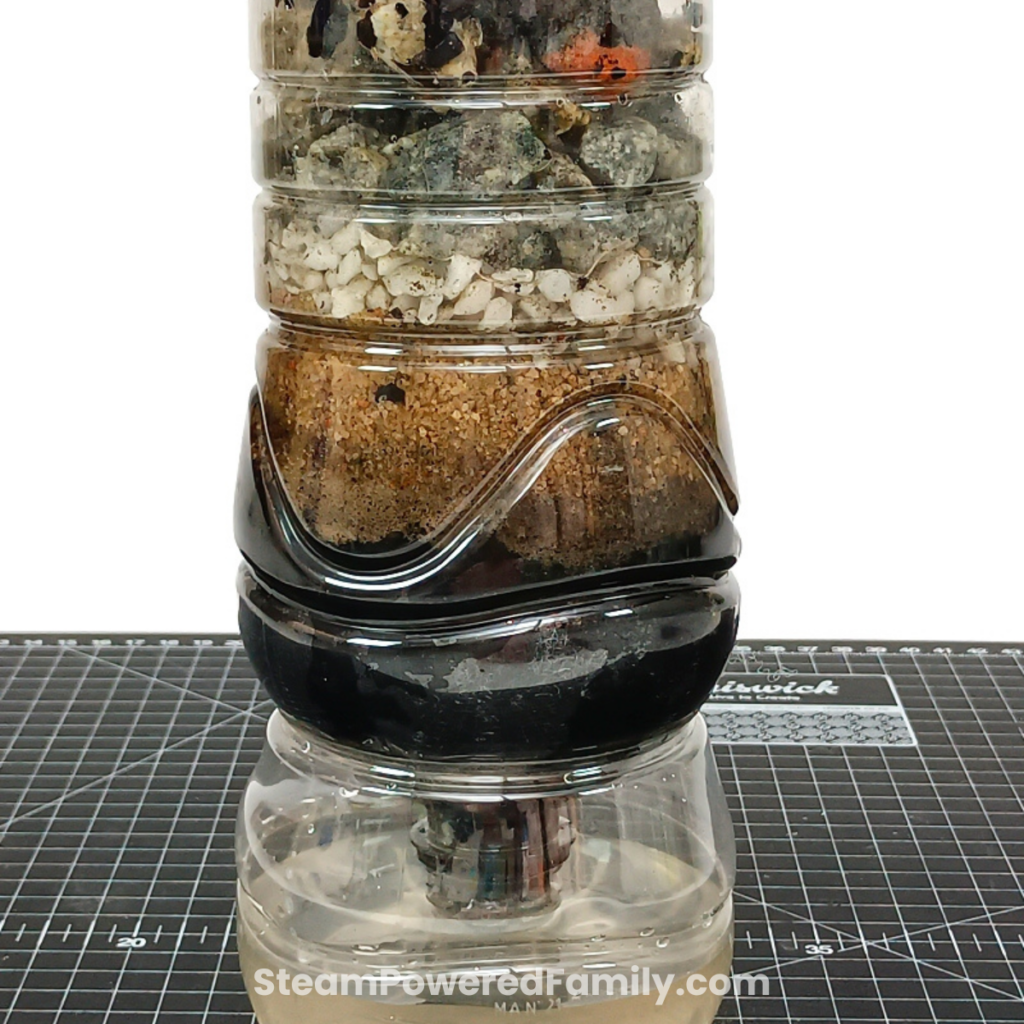
All the layers should measure about 2-3 cm and should be in the following order:
- Start with a layer of activated charcoal over the batting. I used activated charcoal powder, not chunks, as it filters the water better.
- A layer of fine play sand on top of the activated charcoal.
- A layer of medium-coarse sand.
- A layer of small Bonsai stones.
- A layer of medium size stones.
- Lastly, a layer of large stones on the top.
Step 4: Set Up the Filter for Use
Stand the bottle, lid side down in the bottom section you cut off earlier.
Step 5: Make Predictions Before Filtering
Now that the water filter is ready to use, before filtering the dirty water, hand the worksheet out and ask learners to fill in the answers to their predictions about this filtration system used in this experiment.
Download the worksheet here:
Step 6: Pour the Dirty Water Through Your DIY Water Filtration System
Now, slowly pour the dirty water into the filter and watch the filter do its magic to filter out the impurities that were in the water.
How amazing is this!
Please note that this water is not to be consumed as it needs to go through other processes for safe drinking.
If you were out camping and needed clean water to drink, you could make a water filter as you did here, and then you would have to boil the water to safely drink it.
Why Clean Water Matters for Communities Around the World
What your students just built in a few minutes mirrors a process that communities, cities, and entire nations rely on every single day. Around 2 billion people around the world still do not have safely managed drinking water at home. For many of them, a simple filtration system like the one your students just built can be a literal lifeline.
Modern water treatment plants use the same basic principles your DIY water filtration system demonstrates. Layers of materials remove larger debris, finer particles get caught at each stage, and the water comes out visibly cleaner. The plants then add disinfection steps using chlorine, ultraviolet light, or other methods to kill microscopic organisms that filters alone cannot remove. This is why we always remind students that the filtered water from this experiment is not safe to drink, even though it looks clear.
This is also why environmental engineers exist. They are working right now to:
- Design more affordable and effective filters for low-resource communities
- Build water treatment facilities for growing cities
- Protect rivers, lakes, and groundwater from pollution
- Create portable filters for emergency response and disaster relief
- Develop solar-powered desalination and other clean water technologies
Ask your students to look at their finished filter and imagine scaling it up. What would it take to serve a whole village? A school? A neighborhood? The work they started in this lesson is the same work that keeps clean water flowing to billions of people every day.
Classroom Discussion Questions for the Water Filtration System Experiment
These questions and answers can be used to guide the learners in completing the worksheet:
Why did some materials trap more dirt than others?
Different materials have different particle sizes and structures. Materials with smaller gaps, such as sand or cotton, can trap finer particles, while larger materials like gravel mainly catch bigger pieces of debris.
Which filtration layer seemed most effective?
There is no single correct answer. Students should observe which layer appeared to remove the most visible dirt and discuss why it worked well. Often, the finest materials capture the smallest particles, but each layer plays an important role in the overall system.
Why does filtered water still need further treatment before drinking?
Even if the water looks clean, it may still contain microscopic organisms, chemicals, or other contaminants that cannot be seen with the naked eye. Drinking water must undergo additional treatment and testing to ensure it is safe.
How do cities clean water for public use?
Water treatment plants use a series of processes, including screening, settling, filtration, and disinfection. Chemicals, ultraviolet light, or other methods are often used to remove harmful microorganisms before the water reaches homes and businesses.
What challenges do communities face when clean water is unavailable?
Limited access to clean water can affect health, sanitation, education, and daily life. Communities may need to travel long distances to collect water or face increased risks of waterborne diseases.
How might engineers improve a filtration system?
Engineers constantly test new materials, designs, and technologies to make filtration systems more effective, affordable, and sustainable. They may add additional filtration stages or develop methods to remove smaller contaminants.
What natural processes help purify water in the environment?
Nature has its own filtration systems. As water moves through soil, sand, and rock, many impurities are filtered out. Wetlands, plants, and microorganisms also help remove pollutants and improve water quality as part of the natural water cycle.
Extension Ideas for Your DIY Water Filtration System
- Compare different filtration materials and record the results.
- Investigate activated charcoal and its role in water treatment.
- Create a multi-stage filtration challenge.
- Research local water treatment facilities.
- Design a filtration system using only recycled materials.
- Test water clarity using observation charts.
- Explore desalination and other water purification technologies.
Final Thoughts on Your DIY Water Filtration System
We at STEAM Powered Family hope that you enjoyed this magical experiment! You will find many more experiments and projects like this one on this site, including our no prep STEM activities with water roundup, which makes a great companion to this water filter build.
Frequently Asked Questions About DIY Water Filtration Systems
A simple science experiment that demonstrates how layers of materials can remove impurities from water.
Water passes through different materials that trap dirt and particles, making it appear cleaner.
Common materials include cotton, sand, gravel, coffee filters, and recycled plastic bottles.
No, the filtered water may look cleaner but should not be consumed.
It teaches environmental science, engineering design, observation skills, and water treatment principles.
Filtration helps remove contaminants and is a key step in providing clean water.
Yes, testing different materials encourages experimentation and critical thinking.